



How Does CrafterCMS Support DRM?

Amanda Jones

Premium video publishers have a straightforward question when evaluating a CMS for streaming and OTT experiences:
Does this CMS support DRM?
It is a fair question, and it usually comes right behind another one:
Can I integrate my existing DRM provider, such as Axinom or EZDRM, and prevent users from simply downloading my videos?
The short answer from us is yes: CrafterCMS can absolutely be part of a DRM-enabled video platform. But it is important to be precise about what that means.
CrafterCMS is not a DRM vendor. It does not replace services such as Axinom or EZDRM. Instead, CrafterCMS serves as the headless CMS and experience platform that manages video metadata, page and app experiences, entitlement-related content logic, playback configuration, and the APIs that drive web, mobile, and OTT front ends.
CrafterCMS is already positioned for OTT and rich media use cases, with a headless architecture built to support video applications across web, mobile, smart TVs, and other digital channels. It also integrates with AWS Elemental services, which are commonly used in video encoding, packaging, and delivery pipelines.
That distinction matters because in modern streaming architectures, DRM is only one layer of the solution. A secure video platform typically includes content management, encoding and packaging, encryption, license delivery, player integration, authentication and authorization, and CDN delivery. CrafterCMS fits naturally into that broader stack.
What DRM Actually Does in a Modern Video Platform
When people say they want “DRM support,” what they usually mean is that they want to protect premium video from casual downloading and unauthorized playback.
In practice, DRM works by encrypting video assets and requiring a trusted playback environment to obtain a license before decrypting and playing the content. Modern DRM ecosystems rely on technologies such as Google Widevine, Apple FairPlay, and Microsoft PlayReady. Axinom and EZDRM both support these major DRM schemes and provide the APIs and workflows needed to issue keys and licenses for playback across devices.
Axinom describes its service as a multi-DRM platform that works with Widevine, FairPlay, and PlayReady, and exposes APIs for key and license workflows. It also supports integration points with packagers, encoders, and video players.
EZDRM similarly positions itself as a DRM specialist and provides documentation for integrations with AWS Elemental, Bitmovin, Shaka Player, Video.js, THEOplayer, Unified Streaming, and many other packaging and playback components.
That is exactly why a headless CMS approach makes sense. The CMS does not need to become the DRM system. It needs to integrate cleanly with the systems that already do DRM well.
So, Does CrafterCMS Support DRM?
Yes, through integration.
CrafterCMS supports building DRM-enabled experiences because it is an API-first, extensible headless CMS designed to power OTT video applications. CrafterCMS manages the content and digital experience layer, while the DRM provider handles encryption keys, license issuance, and client playback authorization.
This means a CrafterCMS-powered video platform can:
- Manage video catalogs, metadata, thumbnails, schedules, categories, and landing pages
- Deliver playback configuration and entitlement-aware metadata to apps and websites
- Integrate with packaging and streaming pipelines such as AWS Media Services
- Pass the right DRM-related data to the player layer
- Support device-specific experiences across web, mobile, OTT, and smart TV channels
In other words, CrafterCMS is the system that helps you build the experience around protected video, while Axinom, EZDRM, or another DRM platform protects the stream itself.
Can I Integrate Axinom or EZDRM with CrafterCMS?
Yes.
There is nothing about CrafterCMS’s architecture that limits you to a specific DRM vendor. Because CrafterCMS is headless and API-first, it is well suited to integrating with established DRM services such as Axinom and EZDRM. Both vendors expose the kinds of services that modern streaming stacks need: license services, key workflows, player integrations, and compatibility with packaging and encoding systems.
A typical integration pattern looks like this:
- CrafterCMS manages the content model for videos, episodes, seasons, channels, live events, or protected assets.
- Your video workflow packages and encrypts the content using your streaming pipeline.
- Your DRM provider, such as Axinom or EZDRM, manages keys and license issuance.
- Your player application receives playback metadata, manifests, and license endpoint information.
- CrafterCMS delivers the experience layer and can participate in entitlement logic, token generation flows, and presentation of secure playback experiences.
This is the right way to think about “DRM support” in an enterprise CMS context. The CMS should not be a black box or bottleneck. It should be flexible enough to integrate into the video security architecture you already use (or the one you plan to adopt).
“I don't want users downloading my videos”
This is the real business requirement behind most DRM questions.
The good news is that DRM is the industry-standard answer for preventing straightforward downloads and unauthorized playback. Encryption plus license-controlled playback is much stronger than simply hiding a file URL or embedding a standard MP4. DRM also helps enforce device and output rules, depending on the DRM technology and device capabilities. Axinom, for example, highlights configurable access control, hardware-backed protection, and platform coverage across major devices.
But it is worth being honest: no CMS, DRM vendor, or web standard can promise perfect, absolute prevention of copying in every scenario. DRM can make downloading dramatically harder and, with hardware-backed environments, can prevent common screen recording paths on supported platforms. But protection still depends on device support and playback environment. Dolby’s documentation notes that screen recording prevention is available on platforms that support hardware DRM, and not on those that do not.
So the right message to customers is not “nobody can ever copy this video.” The right message is: With CrafterCMS plus a proper multi-DRM architecture, you can deliver professional-grade content protection that is appropriate for premium OTT and subscription video use cases.
Why This Matters for Enterprise Video Teams
For enterprise teams, the bigger issue is not just encryption. It is whether the CMS can fit into a secure, scalable video platform without forcing awkward workarounds.
CrafterCMS is a strong fit here because it combines:
- A headless architecture for omnichannel delivery
- Flexibility for custom front ends and players
- Rich content modeling for video libraries and streaming experiences
- Extensibility for integration with AWS and third-party services
- The ability to manage the experience around the video, not just the file itself
That is especially important when publishers want to combine secure playback with personalized experiences, subscription flows, regional availability, metadata-rich catalogs, and branded apps across devices.
Final Takeaway
If your team is asking, “Does CrafterCMS support DRM?”, the answer is:
Yes, CrafterCMS supports DRM-enabled video platforms through integration with industry-standard DRM services such as Axinom and EZDRM.
If your team is asking, “Can I integrate my DRM with CrafterCMS?”, the answer is also yes.
And if your team is really asking, “Can I stop users from casually downloading premium video?”, then the answer is: Yes, with the right architecture.
CrafterCMS manages the content and experience layer, while your DRM provider manages encryption and licensing. Together, they form the foundation for secure, scalable OTT and video experiences.
You can get started with a flexible, integration-friendly CMS platform today by registering for a free CrafterCMS trial here.
Related Posts

Meet the Crafter Studio AI Assistant: AI-Powered Content Authoring
Amanda Jones

MCP and CMS: Connecting AI Agents to Enterprise Content

Amanda Lee
Why Search Is a First-Class CMS Capability
Amanda Jones

Magnolia DXP vs CrafterCMS: Comparing Enterprise CMS Platforms
Amanda Lee
Related Resources
-
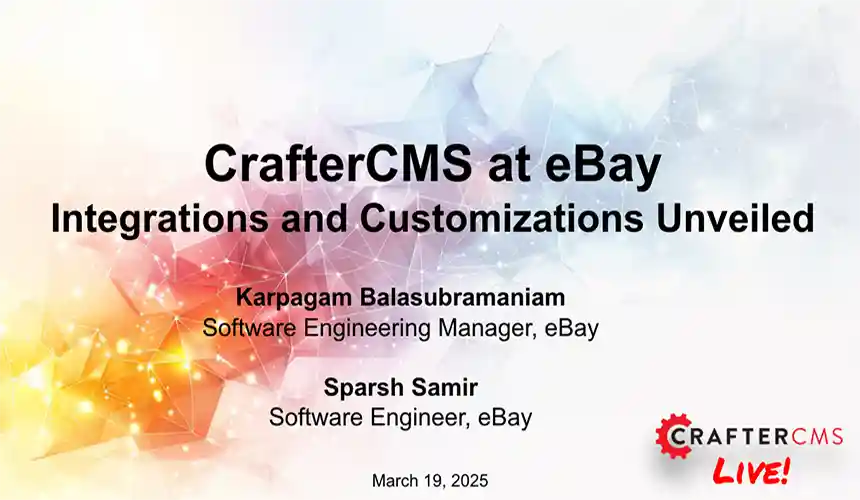
CrafterCMS at eBay: The Universal Content Platform for eBay.com
Webcast
-
Personalized Digital Experiences for a Cruise Liner
Webcast
-
Introducing CrafterCMS v4.0
Webcast
-
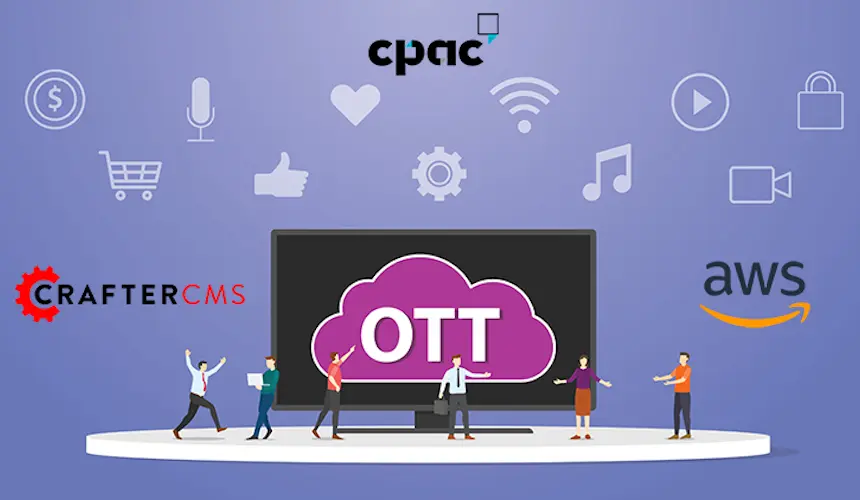
Modernizing Video Delivery and Content Management at CPAC, A Canadian Nationwide Broadcaster
Webcast
-
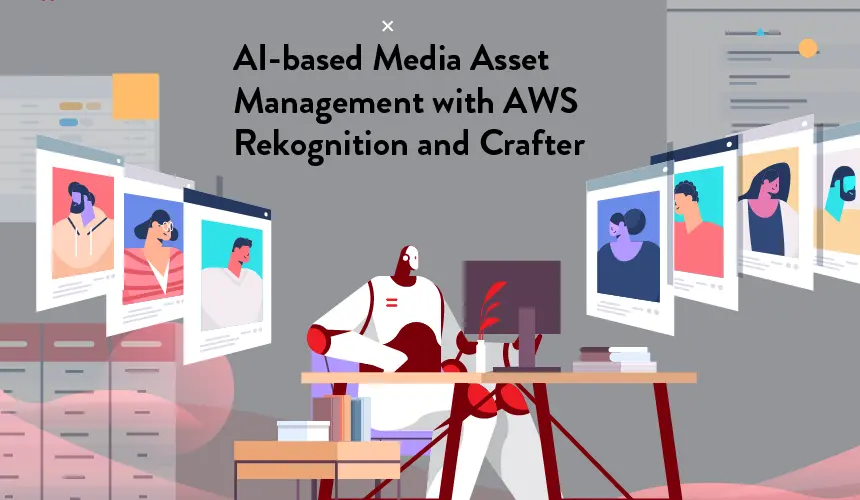
AI-based Media Asset Management with AWS Rekognition and CrafterCMS
Webcast