





AI-Driven Commerce Needs an AI CMS: Lessons from eBay and Papa Johns

Amanda Lee
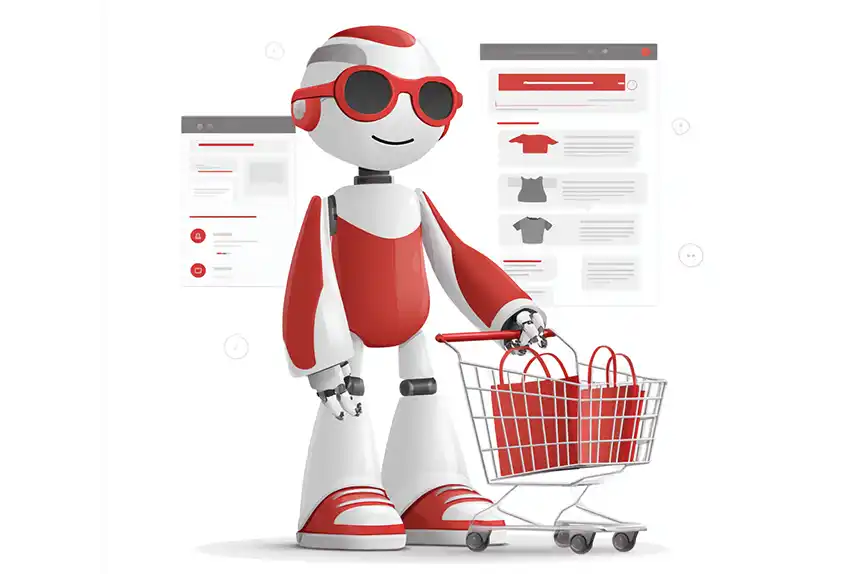
Artificial intelligence is rapidly reshaping the way customers discover, evaluate, and purchase products online. What began with simple product recommendations and chatbots has evolved into a new generation of AI-driven commerce experiences where discovery, personalization, customer service, and fulfillment are increasingly automated and optimized by machine learning.
Major brands are investing heavily in this transformation. Two recent examples getting press, eBay and Papa Johns, demonstrate how AI is redefining digital commerce across both marketplaces and direct-to-consumer brands.
While the consumer-facing innovation often gets the spotlight, these initiatives also reveal a deeper architectural shift happening behind the scenes. AI-powered commerce requires a flexible, structured, and API-driven content platform capable of supporting personalization, experimentation, and rapid iteration.
In other words, AI-powered commerce increasingly requires an AI-ready CMS for content.
Let’s explore how eBay and Papa Johns are deploying AI, and what their strategies reveal about the future of digital experience platforms.
eBay: Reinventing the Marketplace with AI
eBay has been aggressively integrating AI across nearly every aspect of its platform. The company’s vision is clear: AI should power the entire shopping experience, from discovery to transaction.
As eBay’s Chief AI Officer explained:
“We believe that the whole shopping experience will be AI-infused in the future.”
Several major initiatives highlight this transformation.
AI-Powered Product Discovery
AI is dramatically improving how customers find products on eBay. Instead of relying solely on keyword search, the platform increasingly uses:
-
Visual search
-
Semantic search
-
AI-generated product summaries
-
Personalized recommendations
This allows shoppers to discover products more intuitively, often starting with an image or a conversational query instead of a traditional search term.
AI-Assisted Seller Tools
eBay is also deploying AI to help sellers create and optimize listings. Sellers can now generate product descriptions, categorize listings automatically, and improve titles using generative AI.
This reduces friction for sellers while improving the quality and structure of marketplace content.
AI Personalization
Machine learning models analyze behavioral signals to personalize the shopping experience in real time. Recommendations, homepage layouts, and product suggestions continuously adapt to each shopper’s intent. The result is a marketplace that feels increasingly tailored to the individual user.
Behind the scenes, these experiences depend heavily on structured product and marketing content that can be consumed by AI systems and delivered dynamically across multiple channels.
Papa Johns: AI Meets Digital Ordering
While eBay represents a massive marketplace ecosystem, Papa Johns demonstrates how AI is transforming direct-to-consumer digital commerce in the restaurant industry.
The company has made significant investments in digital ordering, personalization, and customer engagement that are powered by AI.
Conversational Ordering
AI-powered assistants are enabling customers to order food through natural conversations across multiple channels, including:
-
Mobile apps
-
Messaging platforms
-
Voice interfaces
Instead of navigating complex menus, customers can simply say something like:
“Order my usual pizza for delivery.”
AI systems understand preferences, location, timing, and promotions to complete the order quickly.
Personalized Promotions
Papa Johns is also using machine learning to personalize marketing offers and promotions based on individual behavior.
AI models analyze factors such as:
-
Order history
-
Time of day
-
Location
-
Customer preferences
This allows the company to deliver targeted promotions that increase conversion rates and customer loyalty.
Predictive Demand and Operations
AI isn’t just improving the customer experience. It’s also optimizing operations. Predictive models help forecast demand, adjust inventory, and optimize delivery logistics.
Together, these innovations help Papa Johns operate more efficiently while delivering a more engaging digital experience.
The Hidden Requirement: AI-Ready Content Infrastructure
When companies deploy AI in commerce, most attention focuses on models, data science, and customer-facing features.
But there’s another critical layer that often gets overlooked:
Content infrastructure.
AI-powered commerce requires content systems that can support:
-
Structured product data
-
Dynamic content delivery
-
API-first architectures
-
Rapid experimentation
-
Real-time personalization
Traditional CMS platforms, especially those designed around page-based publishing, often struggle in these environments.
Modern digital commerce experiences require something different: a headless, API-driven, developer-friendly CMS platform that integrates seamlessly with AI services and modern commerce architectures. Modern e-commerce stacks need an AI CMS.
Why AI-Driven Commerce Works Well with CrafterCMS
Both eBay and Papa Johns rely on CrafterCMS to power their customer-facing platforms, and this is exactly where CrafterCMS excels.
Learn more: How eBay Built a Unified Content Platform on CrafterCMS
CrafterCMS was designed from the beginning for high-performance, API-first digital experiences, making it well suited for AI-driven commerce environments.
Key capabilities include:
Structured Content for AI
AI systems perform best when content is structured and accessible. CrafterCMS uses Git-based structured content models that make it easier for AI systems, recommendation engines, and personalization platforms to consume and reason over content.
This becomes increasingly important as organizations adopt AI-driven discovery, personalization, and conversational commerce.
API-First Delivery
CrafterCMS separates content authoring from content delivery using a fully decoupled architecture. Content is delivered via APIs to websites, mobile apps, kiosks, e-commerce and conversational interfaces.
This flexibility allows AI-powered applications to retrieve and assemble experiences dynamically.
High-Performance Digital Experiences
Commerce platforms require extremely fast response times. CrafterCMS’s stateless delivery architecture allows organizations to scale globally while maintaining high performance for content-driven experiences.
This architecture works well alongside modern commerce platforms, recommendation engines, and AI-driven personalization systems.
AI-Enabled Workflows
CrafterCMS enables the move toward a new generation of AI-enabled content workflows, where AI can assist with content generation, transformation, and optimization.
As generative AI becomes embedded in development tools and content pipelines, this capability becomes increasingly valuable for teams managing complex digital experiences.
The Future: AI-Native Digital Commerce
The strategies being pursued by companies like eBay and Papa Johns point toward a broader industry shift.
Commerce experiences are evolving from:
-
Static browsing
-
Keyword search
-
Manual navigation
Toward something much more dynamic:
-
Conversational discovery
-
AI-generated recommendations
-
Personalized digital storefronts
-
Automated content generation
In this new world, AI becomes the interface between customers and digital platforms.
And behind that interface sits a critical system: the content platform that powers every product page, promotion, campaign, and customer experience. As digital commerce becomes increasingly AI-driven, organizations will need content infrastructure that is equally ready for that future.
AI-Driven Experiences Need an AI-Ready CMS
The examples from eBay and Papa Johns illustrate an important reality: AI innovation in commerce doesn’t happen in isolation. It depends on the digital experience stack that powers content, data, and customer interactions.
Organizations building AI-powered commerce platforms need content systems that are:
-
API-first
-
structured
-
scalable
-
developer-friendly
-
ready to integrate with AI services and automation tools
That’s why forward-thinking brands like eBay and Papa Johns are increasingly adopting, AI-enabled modern platforms like CrafterCMS to power their digital experiences.
As AI continues to transform how customers interact with digital brands, the CMS itself must evolve as well.
Welcome to the era of the AI CMS.
Learn More
Try the AI-enabled CrafterCMS today by registering for a free trial here.
Related Posts

What Is WebMCP? Making Websites Ready for AI Agents

Sara Williams

Meet the Crafter Studio AI Assistant: AI-Powered Content Authoring

Amanda Jones

MCP and CMS: Connecting AI Agents to Enterprise Content
Amanda Lee

Why Search Is a First-Class CMS Capability
Amanda Jones
Related Resources
-
CrafterCMS at eBay: The Universal Content Platform for eBay.com
Webcast
-
Personalized Digital Experiences for a Cruise Liner
Webcast
-
Introducing CrafterCMS v4.0
Webcast
-
Modernizing Video Delivery and Content Management at CPAC, A Canadian Nationwide Broadcaster
Webcast
-

Building React Apps on a Headless CMS
White Paper