


Modernizing Healthcare Portals With an Enterprise Headless CMS

Amanda Lee
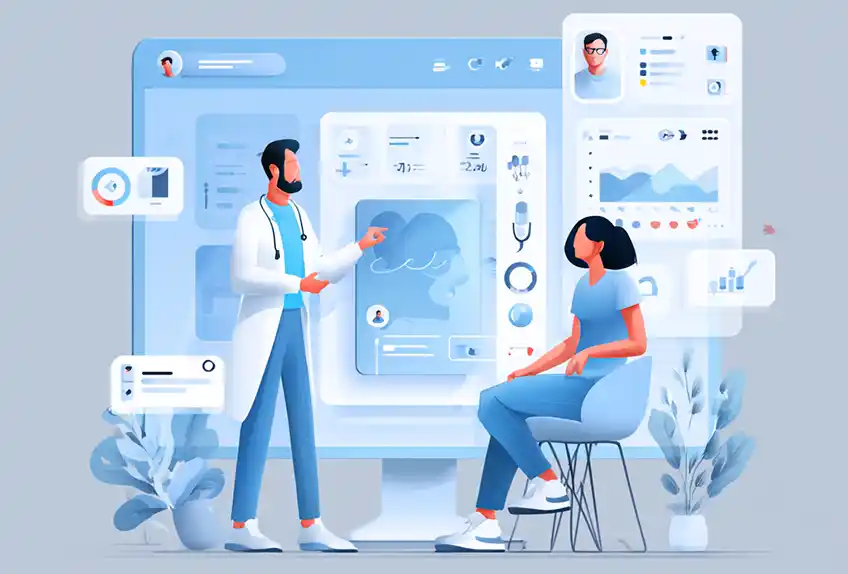
Healthcare organizations are under increasing pressure to modernize their digital experiences, especially provider and member portals. These systems are no longer “just websites.” They are mission-critical platforms that sit at the intersection of patient engagement, operational efficiency, regulatory compliance, and digital transformation.
For large-scale healthcare insurance providers in particular, their CMS requirements span business needs, technical architecture, business continuity, and compliance. More importantly, traditional legacy CMS platforms and simple headless-only CMSs are struggling to keep up. What's needed instead is a modern, enterprise-grade headless CMS.
In this article, we highlight five key requirements that any content management system must satisfy to deliver for modern healthcare organizations and their portals.
The Reality: Healthcare Portals Are High-Stakes Systems
Unlike typical marketing sites, healthcare portals must operate under strict constraints:
- Sensitive data and regulatory oversight (HIPAA, SOC 2, etc.)
- High availability requirements for members and providers
- Complex integrations with backend systems (claims, eligibility, EHRs)
- Continuous content updates across multiple audiences
- Security and auditability at every layer
The requirements reflect this reality. They demand not just content management, but also platform reliability, governance, and extensibility.
This is where the gap between legacy CMS platforms and modern architecture becomes obvious.
Requirement #1: Security and Compliance Are Non-Negotiable
Across business and compliance requirements, one theme dominates: security by design.
Healthcare organizations require:
- Role-based access control (RBAC)
- Full audit trails of content changes
- Secure authentication and integration with identity providers
- Protection against common vulnerabilities (OWASP)
- Data governance and content-level permissions
Many legacy CMS platforms bolt these capabilities on. But in healthcare, that’s not sufficient. A modern CMS must embed security into its architecture.
CrafterCMS, for example, is built on a secure Java/Spring foundation with:
- Fine-grained RBAC at the content and workflow level
- Git-based versioning for full traceability (who changed what, when, and why)
- Secure APIs and extensibility without exposing system internals
This approach aligns directly any healthcare organization's compliance requirements.
Requirement #2: Scalability and Performance at Enterprise Scale
Provider and member portals must handle unpredictable demand, especially during enrollment periods, policy updates, or major healthcare events.
Healthcare portal requirements include:
- High performance under load
- Horizontal scalability
- Global availability
- Stateless architecture for resilience
This is where traditional CMS platforms, especially database-centric CMSs, begin to break down. Modern architectures shift toward stateless delivery and horizontally scalable services.
CrafterCMS’s delivery tier (Crafter Engine) is:
- Stateless and serverless by design
- Free of runtime database dependencies
- Backed by search indexes (OpenSearch) for fast content retrieval
- Easily deployed across multiple regions
The result: predictable performance and near-linear scalability, even under peak demand.
Requirement #3: Authoring Experience Matters More Than Ever
While technical requirements dominate, the business requirements reveal another critical truth: Healthcare organizations need to empower non-technical users.
This includes:
- Marketing teams updating member communications
- Operations teams managing provider-facing content
- Compliance teams reviewing and approving updates
Content author/editor/publisher requirements call for:
- Intuitive content authoring
- Workflow and approvals
- Real-time preview
- Ease of use without sacrificing control
This is often where headless CMS platforms fall short, as they prioritize APIs over usability.
CrafterCMS takes a different approach with its Experience Builder, offering:
- In-context editing directly on the page
- Live preview across channels (web, mobile, any device)
- Drag-and-drop experience building
- Workflow-driven publishing
This ensures that business users can move fast without depending on developers, while still operating within governed workflows.
Requirement #4: Integration Flexibility Is Critical
Healthcare portals are not standalone systems. They are deeply integrated into enterprise ecosystems.
Their requirements highlight the need to integrate with:
- Identity providers (SSO, OAuth, SAML)
- Backend systems (claims, eligibility, billing)
- Analytics and personalization engines
- Third-party services and APIs
This demands a CMS that is:
- API-first
- Extensible
- Compatible with modern development frameworks
CrafterCMS addresses this through:
- REST and GraphQL APIs
- Server-side scripting (Groovy) for custom logic
- Full control over content delivery endpoints
- Native support for modern front-end frameworks (React, Next.js, etc.)
This flexibility allows healthcare organizations to compose their digital experience architecture without constraints.
Requirement #5: Business Continuity and Resilience
Healthcare systems cannot afford downtime.
The extreme need for business continuity drives CMS platform requirements that include:
- Disaster recovery
- Multi-region deployment
- Backup and restore capabilities
- High availability architectures
This is where infrastructure and CMS design intersect.
CrafterCMS’s stateless delivery model enables:
- Active-active multi-region deployments
- Rapid failover without data loss
- Simplified recovery processes
Additionally, its Git-based content repository provides:
- Built-in versioning
- Easy rollback to previous published states
- Content portability across environments (DevContentOps)
This creates a system that is not only resilient, but also operationally predictable.
The Bigger Shift: From CMS to Digital Experience Platform
What these requirements ultimately reveal is a broader transformation.
Healthcare organizations are no longer looking for:
- A place to “store content”
They are looking for:
- A platform to power secure, reliable digital experiences
This includes:
- Omnichannel delivery
- Personalized interactions
- Continuous deployment of content and features
- Decoupled architectures (content authoring separate from content delivery)
This is why the conversation is shifting from traditional CMS to enterprise-grade, headless, and composable platforms.
Why CrafterCMS Aligns with Modern Healthcare Needs
When you map these requirements to platform capabilities, a clear pattern emerges.
Healthcare organizations need a CMS that is:
- Secure by design, not by extension
- Scalable without bottlenecks, not limited by architecture
- Author-friendly, not developer-dependent
- Integration-ready, not siloed
- Resilient and cloud-native, not fragile
Read more: How a Headless CMS Improves Healthcare Digital Experiences
CrafterCMS was built with these principles from the ground up.
It combines:
- A Git-based content repository for governance and traceability
- A stateless content delivery engine for performance and scale (that is also decoupled from the content authoring system)
- A powerful authoring experience for business users (that is, likewise, decoupled from the content delivery system)
- An API-first architecture for integration and extensibility
And increasingly, it incorporates AI-native CMS capabilities, enabling organizations to move toward intelligent, conversational, and automated digital experiences in the future.
Final Thought: Requirements Are the Blueprint for the Future
What’s most interesting about healthcare-focused enterprise CMS requirements is that they don’t just describe current needs, they predict where the industry is going.
In healthcare, that future includes:
- More digital engagement
- More automation
- More personalization
- And higher expectations for performance and security
The organizations that succeed will be those that choose platforms aligned with this trajectory. Not just a CMS, but a foundation for the next generation of digital experiences.
Learn More
Register for a free CrafterCMS trial today and start your journey toward delivering modern healthcare portal experiences.
Related Tags
Related Posts

Meet the Crafter Studio AI Assistant: AI-Powered Content Authoring

Amanda Jones

MCP and CMS: Connecting AI Agents to Enterprise Content
Amanda Lee
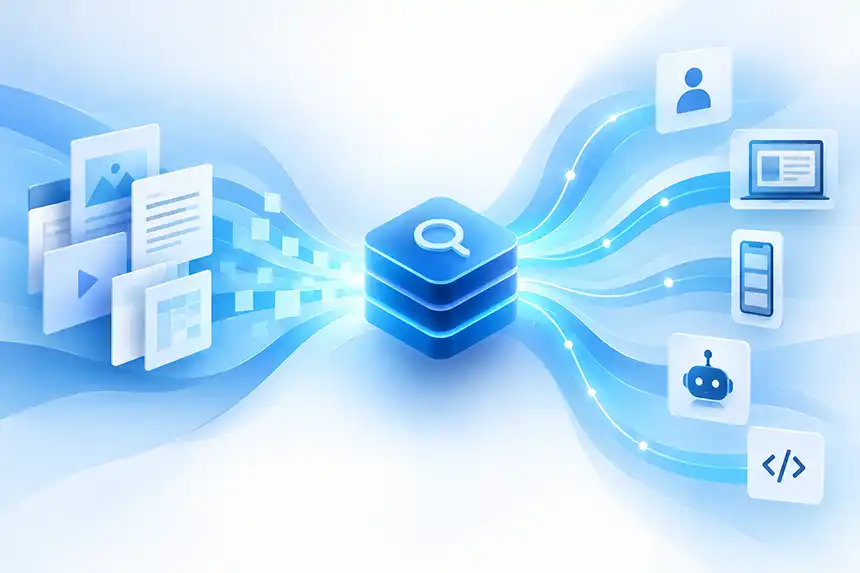
Why Search Is a First-Class CMS Capability
Amanda Jones

Magnolia DXP vs CrafterCMS: Comparing Enterprise CMS Platforms
Amanda Lee
Related Resources
-
CrafterCMS at eBay: The Universal Content Platform for eBay.com
Webcast
-
Personalized Digital Experiences for a Cruise Liner
Webcast
-
Introducing CrafterCMS v4.0
Webcast
-
Modernizing Video Delivery and Content Management at CPAC, A Canadian Nationwide Broadcaster
Webcast
-
Building React Apps on a Headless CMS
White Paper