




No-Code Experience Building for Marketers & Designers

Amanda Lee
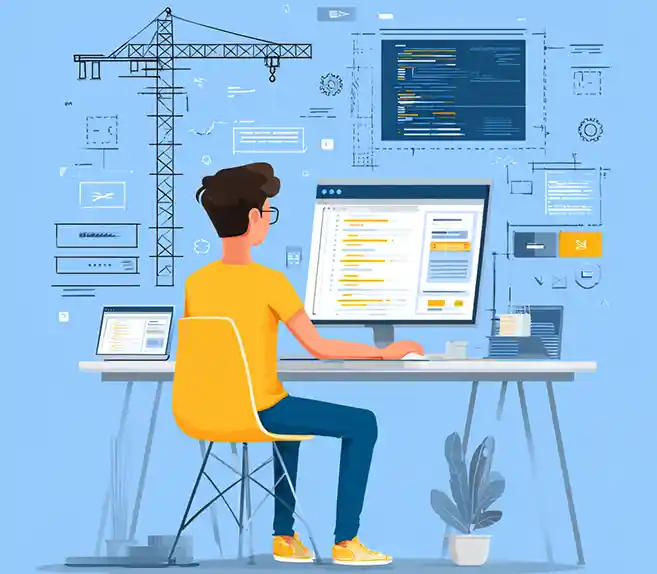
Digital teams are under more pressure than ever to deliver fresh, personalized, multi-channel experiences faster than ever. Marketing timelines are accelerating. Customer expectations are rising. And design teams are now responsible for ensuring cohesive user journeys across web, mobile, apps, kiosks, OTT video, and emerging conversational interfaces.
But the reality inside most companies looks very different:
-
Marketers still depend on developers for everyday experience updates.
-
Designers struggle to iterate rapidly when CMS tools limit their flexibility.
-
Release cycles slow down innovation.
-
Content and experience delivery are often tightly coupled to a specific front-end framework.
This is the friction point where no-code experience building becomes a game-changer.
A new generation of platforms, especially next-gen headless and composable CMS solutions, make it possible for non-technical users to build, update, and launch experiences independently. No developer bottlenecks. No waiting for release cycles. No channel limitations.
This post explores what no-code experience building really means for modern digital teams and why it has become an essential ingredient in enterprise digital transformation.
Why No-Code Experience Building Matters
No-code isn’t about replacing developers. It’s about empowering marketers and designers to:
-
move faster
-
experiment more confidently
-
personalize content with precision
-
accelerate time-to-market
-
maintain brand integrity at scale
Developers still build the foundational components. Designers craft the visual system. But once these pieces exist, business users should be able to assemble and reassemble them freely without editing code or opening Jira tickets.
This is what the modern digital stack demands:
A separation of concerns that preserves developer creativity and enables marketer agility.
What “No-Code Experience Building” Really Means
There's a lot of confusion around what qualifies as no-code. Many CMS vendors advertise no-code features, but the experience often ends up being:
-
limited to a single front-end framework
-
constrained to traditional web pages
-
dependent on proprietary templates
-
too rigid for designers
-
too shallow for marketers
True no-code experience building should meet several criteria:
1. Channel-Agnostic Experience Assembly
Users should be able to build:
-
websites
-
landing pages
-
microsites
-
mobile experiences
-
digital signage
-
OTT layouts
-
in-app content
-
AI-powered interfaces
-
multi-screen journeys
…all from the same system.
No-code must extend beyond “make a website page" to “build any digital experience.”
2. Design Flexibility Without Breaking Brand Rules
Designers need control. Marketers need safety. No-code tools should:
-
enforce brand guidelines
-
provide reusable components
-
allow variations without code changes
-
update styles globally
This balance of freedom + governance is critical for enterprise scale.
3. Developer-Extensible Components
No-code doesn’t eliminate coding as developers still create the foundational building blocks:
-
content types
-
reusable components
-
layout modules
-
personalization logic
-
integrations
-
channel-specific renderers
Marketers assemble. Developers extend. Designers shape. This is modern digital operations.
4. Instant Preview and In-Context Editing
Drag-and-drop only works well if editors can see exactly what the experience will look like for every channel.
Preview should be:
-
real-time
-
visually accurate
-
device-aware
-
context-aware
-
layout-aware
If a marketer can’t visualize the final output, no-code loses its value.
How No-Code Accelerates Digital Operations
When architects shift to a no-code-first mindset, the benefits compound quickly.
1. Faster Time-to-Market
Campaigns that once took weeks can launch in hours. Landing pages and microsites become self-serve. Iterations happen immediately, not in the next sprint.
2. More Experimentation = Better Outcomes
When business users can run tests without dev involvement:
-
conversion rates increase
-
A/B testing becomes continuous
-
personalization programs expand
-
design teams can iterate visually
No-code becomes a force multiplier for creativity and optimization.
3. Reduced Developer Backlog
Developers aren't stuck handling:
-
text updates
-
layout tweaks
-
new content types
-
landing page setups
They focus on high-value engineering such as microservices, integrations, edge logic, AI workflows, personalization engines, and more.
4. Stronger Collaboration Across Teams
No-code bridges the gap between:
-
marketing
-
design
-
product
-
engineering
-
data
-
content operations
Everyone operates on the same foundation with roles that complement ,not interfere, with each other.
Why No-Code Matters Even More in a Headless + Composable World
As organizations adopt enterprise-grade headless CMSs and composable DXPs, front-end complexity naturally increases. React, Vue, Angular, Next.js, Swift, Unity, Roku, iOS/Android apps, XR, and more, each channel becomes its own world.
Without no-code tools, marketers get locked out of these worlds entirely.
A modern CMS must solve this problem by offering:
- no-code capabilities without dictating front-end technology
- no-code support across all digital channels
- no-code workflows that coexist with developer autonomy
This is the gap in the industry and where CrafterCMS stands out, especially among headless CMS vendors.
CrafterCMS: No-Code Experience Building
While many CMS platforms restrict no-code tools to specific frameworks or page templates, CrafterCMS takes a fundamentally different approach.
The CrafterCMS Experience Builder is:
-
front-end agnostic
-
channel-agnostic
-
component-based
-
fully headless
-
extensible by developers
-
empowering for marketers and designers
Here’s how.
A) CrafterCMS Experience Builder Works Across All Front-End Technologies
Developers create components using any front-end stack, including React, Vue, Angular, Next.js, HTML5/Bootstrap, or native mobile UI components, and expose them to authors as reusable building blocks.
Marketers can then:
-
drag and drop components
-
rearrange layouts
-
configure personalization
-
adjust content visually
-
preview across channels
-
publish instantly
No coupling. No constraints. No template lock-in.
This is true no-code experience building for the composable era.
B) AI-Powered Content and Experience Creation
CrafterCMS also integrates native AI capabilities, enabling marketers to accelerate:
Content creation
AI can draft, refine, summarize, or extend content while under editorial control.
Experience creation
AI can help:
-
generate layout variations
-
suggest components
-
optimize content for engagement
-
assist with personalization
-
update metadata
-
identify content gaps
Workflow automation
AI agents can:
-
validate content
-
check brand guidelines
-
detect broken links
-
generate alternatives
-
help editors complete tasks faster
AI doesn’t replace creativity. It enhances it.
Summary: No-Code Is the New Standard for Digital Teams
The future of digital experience delivery is collaborative, composable, and AI-accelerated. No-code empowers marketers and designers to move at the speed of the business while giving developers the freedom to build sophisticated, scalable front-end architectures.
CrafterCMS’s Experience Builder, combined with its AI-powered authoring and content tools, delivers one of the most flexible and powerful no-code experience-building solutions on the market that are truly aligned with the needs of modern enterprise teams.
Learn More
Give CrafterCMS and it's no-code tooling a try by registering for a free trial today.
Related Tags
Related Posts

Meet the Crafter Studio AI Assistant: AI-Powered Content Authoring

Amanda Jones

MCP and CMS: Connecting AI Agents to Enterprise Content
Amanda Lee
Why Search Is a First-Class CMS Capability
Amanda Jones

Magnolia DXP vs CrafterCMS: Comparing Enterprise CMS Platforms
Amanda Lee
Related Resources
-
CrafterCMS at eBay: The Universal Content Platform for eBay.com
Webcast
-
Personalized Digital Experiences for a Cruise Liner
Webcast
-
Introducing CrafterCMS v4.0
Webcast
-
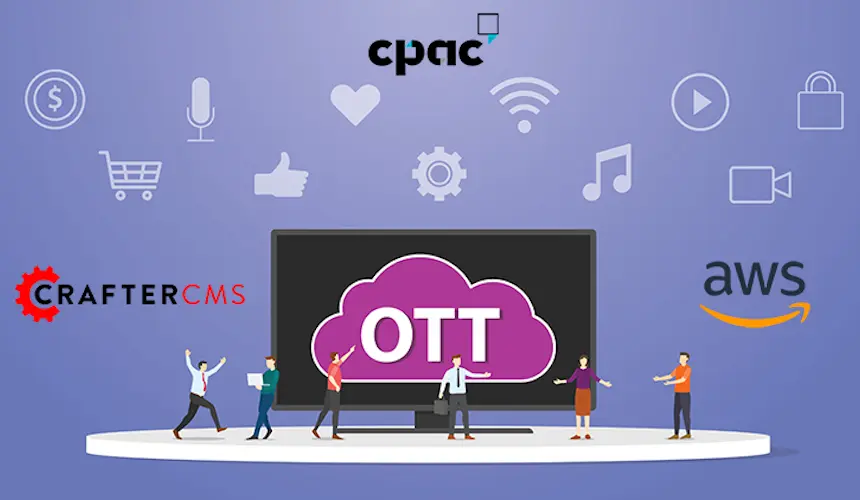
Modernizing Video Delivery and Content Management at CPAC, A Canadian Nationwide Broadcaster
Webcast
-
Building React Apps on a Headless CMS
White Paper