



What Are AI Skills? From Intelligent Assistance to Executable Capabilities

Amanda Lee
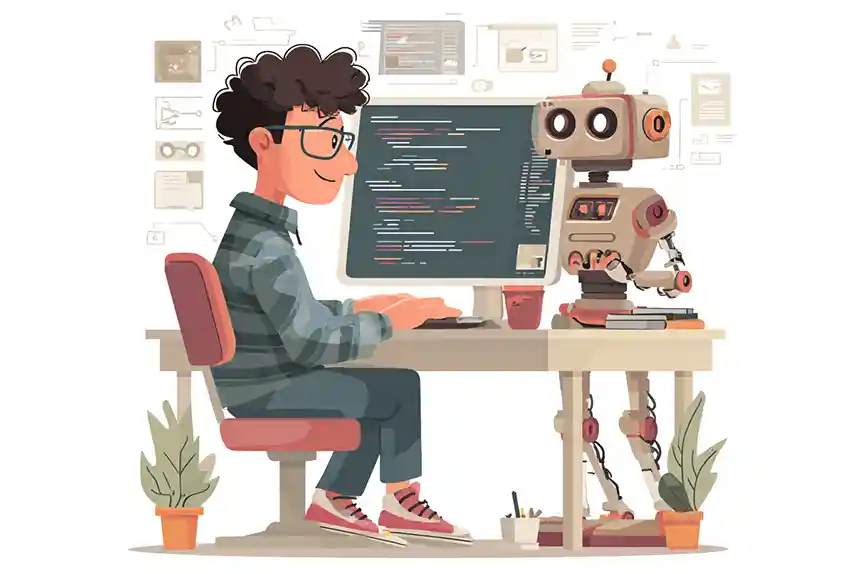
Artificial intelligence has moved fast from novelty to necessity. What started with chat-based assistants answering questions has evolved into AI tools that write code, design interfaces, analyze data, and even coordinate other AI systems. Yet as impressive as these tools are, many organizations still struggle to move from experimentation to execution.
The missing link is not more models, better prompts, or bigger context windows.
It’s AI Skills.
AI Skills represent a shift in how we think about applying AI, not just as a conversational interface, but as a system capable of performing well-defined, repeatable actions inside real-world workflows. They are the bridge between “AI that helps” and “AI that does.”
This article explores what AI Skills are, why they matter, and how they’re reshaping software development. In the final section, we’ll look specifically at how AI Skills apply to CMS-based website development, and why certain platforms are uniquely well-suited to this new paradigm.
The Evolution: From AI Assistants to AI Skills
Most people’s first exposure to AI came through assistants: chatbots that answer questions, summarize documents, or generate content on demand. These tools are powerful, but they are fundamentally reactive. They wait for input, respond, and then disappear until the next prompt.
AI Skills change that model.
Instead of asking:
“Can you help me with this?”
AI Skills enable:
“Perform this action, following these rules, using this system.”
This distinction is subtle but profound.
An AI Skill is a capability and not just a response.
Defining AI Skills
At a high level, AI Skills are:
-
Explicit – Clearly defined actions or capabilities
-
Repeatable – Designed to be used consistently, not ad hoc
-
Context-aware – Grounded in real system state and structure
-
Executable – Able to modify, create, or operate on artifacts
In practical terms, an AI Skill might be:
-
“Generate a new service module using our standard architecture”
-
“Refactor this codebase to support multi-region deployment”
-
“Create test cases for all public APIs”
-
“Convert this static site into a CMS-managed project”
-
“Audit content for accessibility and fix violations”
These are not one-off prompts. They are skills that can be invoked, refined, and reused.
Skills vs Prompts
Much of today’s AI usage is still prompt-centric. While prompting is useful, it has limits:
-
Prompts are fragile
-
Results vary wildly
-
Knowledge is implicit, not encoded
-
Repeatability is poor
AI Skills invert this model.
Instead of embedding knowledge in a human-written prompt, AI Skills encode knowledge in:
-
Project structure
-
Schemas and constraints
-
Tooling and APIs
-
Defined workflows
The AI doesn’t guess what “good” looks like. It operates within a system that already defines it.
This is why AI Skills scale, while prompts don’t.
The Building Blocks of AI Skills
Across industries and tools, effective AI Skills tend to share a few core ingredients.
1. Structured Inputs
AI performs best when it can clearly understand:
-
What exists
-
How it’s organized
-
What rules apply
Unstructured blobs of data force AI to infer intent. Structured artifacts such as schemas, files, models, etc. make intent explicit.
2. Observable State
For an AI Skill to be reliable, the system it operates on must be visible:
-
Code in repositories
-
Configurations as text
-
Version history
-
Clear relationships between components
If the AI can’t see the system, it can’t safely change it.
3. Deterministic Execution Paths
AI Skills work best when:
-
Actions are constrained
-
Side effects are predictable
-
Changes are reviewable
This doesn’t limit creativity, it channels it.
4. Feedback Loops
Skills improve through:
-
Diff-based review
-
Automated validation
-
Human oversight
-
Iteration
AI Skills are not fire-and-forget. They are collaborative.
Why AI Skills Are Taking Off Now
AI Skills are emerging now for a simple reason: the ecosystem finally supports them.
-
LLMs are strong enough to reason across systems
-
Developer tools expose real project structure
-
Git-based workflows provide safety nets
-
AI agents can chain actions together
This convergence allows AI to move from suggestion to execution without losing control.
AI Skills in Software Development
Software development is one of the first domains where AI Skills are taking hold, because it already has many of the required characteristics:
-
Text-based artifacts
-
Strong version control
-
Clear conventions
-
Automated validation
AI Skills in development commonly include:
-
Code scaffolding
-
Refactoring
-
Migration
-
Documentation generation
-
Test creation
-
CI/CD optimization
As these skills mature, developers spend less time on mechanics and more time on intent, architecture, and outcomes.
Applying AI Skills to CMS and Website Development
This is where things get especially interesting.
CMS-based web development has traditionally been resistant to automation. Many CMS platforms were designed around:
-
Database-centric storage
-
Hidden schemas
-
UI-driven configuration
-
Proprietary abstractions
These choices make sense for human editors, but they create friction for AI.
The CMS Challenge
When content models live in databases and behavior is defined through admin UIs:
-
AI can’t inspect structure easily
-
Changes are hard to reason about
-
Automation becomes brittle
As a result, AI tools are often relegated to:
-
Content generation
-
Copy editing
-
Basic SEO assistance
AI Skills unlock a much broader set of capabilities, but only if the CMS is easily AI-addressable.
What AI Skills Look Like in CMS-Based Web Development
In a CMS and website context, AI Skills can include:
-
Converting static sites into managed experiences
-
Creating and evolving content models
-
Refactoring templates and layouts
-
Implementing localization and personalization
-
Generating delivery APIs and queries
-
Maintaining consistency across environments
These are not “content tasks.” They are development tasks, and they benefit enormously from automation.
Why Architecture Matters
Not all CMS platforms can support AI Skills equally.
CMSs that expose:
-
Content as structured files
-
Schemas as explicit definitions
-
Configuration as versioned text
…are fundamentally easier for AI to work with than systems where logic and structure are hidden behind UI layers and databases.
This is why AI-native platforms like CrafterCMS are particularly well-aligned with AI Skills.
By storing content as XML files in Git and treating the CMS as a composable development platform (and not just a content API in the cloud), CrafterCMS enables AI tools to operate directly on the same artifacts developers use.
AI can:
-
Read content models
-
Modify templates
-
Understand delivery logic
-
Propose safe, reviewable changes
The CMS becomes a shared workspace for humans and machines.
Headless Plus: Amplifying AI Skills
AI Skills are further amplified when a CMS includes built-in capabilities such as:
-
Search and indexing
-
SPA support and Templating engines
-
Scripting and extensibility
-
Comprehensive delivery APIs
When these tools are part of the platform, and not just external integrations, AI has fewer boundaries to cross and fewer assumptions to make.
The result is faster, more accurate execution.
The Future: CMS as an AI-Operable Platform
As AI Skills mature, CMS platforms will increasingly be judged by how well they support machine collaboration, and not just human usability.
The future CMS will:
-
Encode best practices in structure, not documentation
-
Expose systems as readable, modifiable artifacts
-
Enable AI agents to assist across the full lifecycle
In that future, AI doesn’t replace developers, designers, or content teams.
It amplifies them.
Final Thoughts
AI Skills represent a shift from interaction to execution: from asking AI for help to giving AI responsibility. They are how organizations turn AI from a tool into a teammate.
For CMS-based website development, this shift is especially transformative. Platforms that embrace openness, structure, and developer-centric workflows will unlock far more value from AI than those that treat it as an add-on.
The question is no longer whether AI will shape the future of web development.
It’s whether your platform is ready to work with it.
Try CrafterCMS Now
Start experimenting with an AI-ready CMS now. Register for a free CrafterCMS trial today.
Related Posts
MCP and CMS: Connecting AI Agents to Enterprise Content
Amanda Lee
Why Search Is a First-Class CMS Capability

Amanda Jones

Magnolia DXP vs CrafterCMS: Comparing Enterprise CMS Platforms
Amanda Lee

Adobe AEM vs CrafterCMS: Which Enterprise CMS Is Better?

Sara Williams